The King of Mushrooms
Deep in the cold birch forests of Northern Europe, Siberia, and North America grows one of nature's most extraordinary fungi: chaga. Long before it became a staple of modern wellness culture, chaga was revered by ancient practitioners across the Nordics, Russia, and Eastern Europe—prized for reducing inflammation, boosting the immune system, supporting digestion and a healthy gut bacterial balance, and treating skin infections. Some Siberian villages still brew chaga tea the same way their ancestors did thousands of years ago.
A Fungus Unlike Any Other
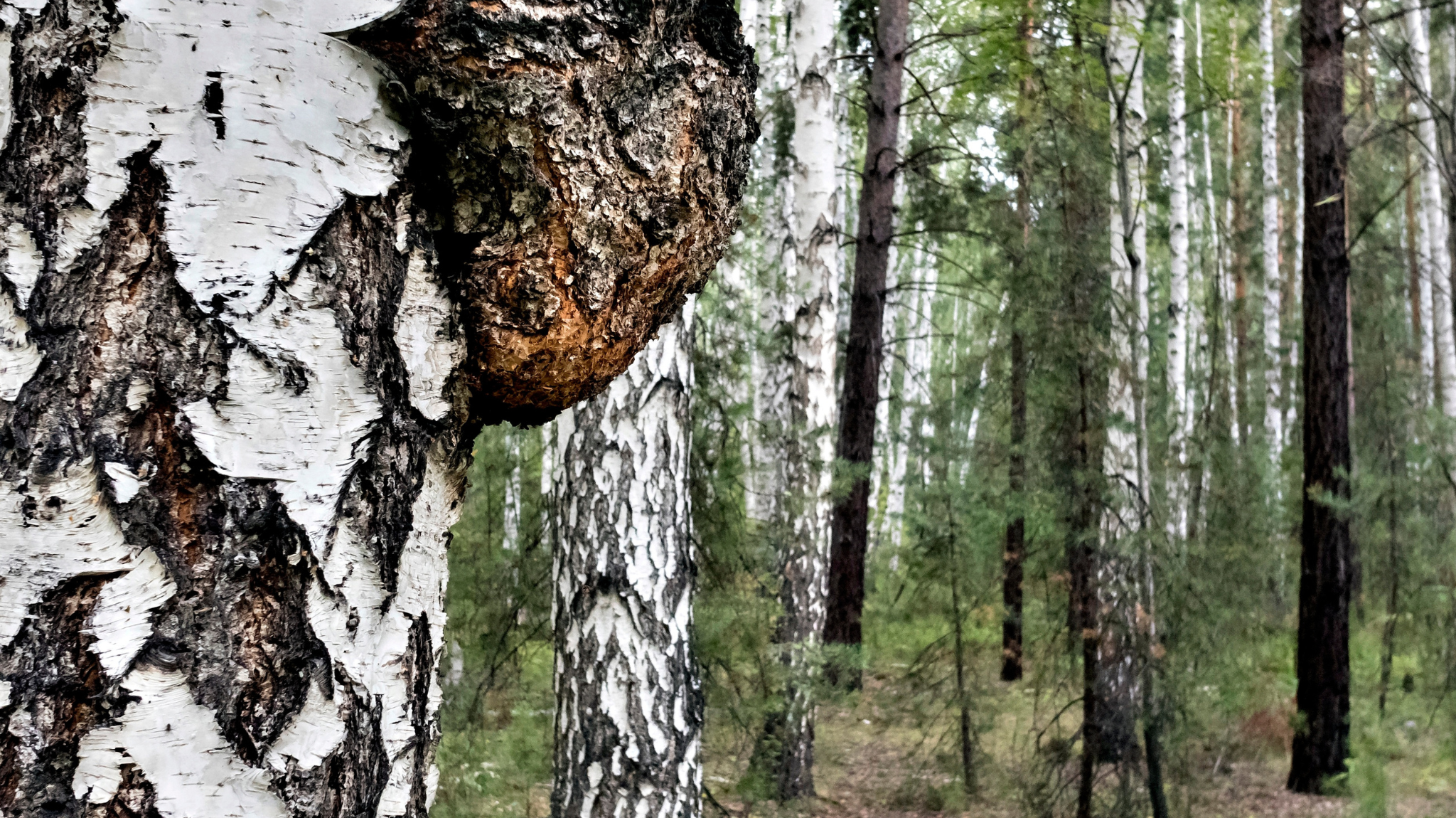
Chaga doesn't look like a typical mushroom. There's no cap, no stem—just a dense, irregular conk that erupts from the bark of its host tree, resembling a mass of burnt charcoal on the outside and revealing a rich reddish-brown interior within. Harvesting it requires a sharp knife or hatchet; it's that hard.
Unlike most functional mushrooms, chaga cannot be cultivated indoors or on a farm. It grows almost exclusively on birch trees—though it can occasionally be found on alder, aspen, and elm—and it's parasitic by nature. Most trees hosting a chaga conk are dying or already dead. During this slow process, the fungus absorbs beneficial compounds from the birch tree, concentrating them into the conk over many years.
What Makes Chaga So Remarkable
Chaga contains a remarkable concentration of antioxidants, along with unique compounds such as betulinic acid, inotodiol, polysaccharides, and beta-glucans. These naturally occurring constituents have been studied for their potential to:
- Strengthen immune health
- Protect cells from oxidative stress
- Promote a healthy inflammatory response
- Support healthy aging
Among chaga's most celebrated qualities is its antioxidant density. Antioxidants help neutralize free radicals—unstable molecules that contribute to cellular damage and accelerated aging. By helping the body manage oxidative stress, chaga may support overall cellular wellness. Traditional uses also included supporting blood sugar balance, heart health, and digestive function—applications that ancient practitioners and contemporary researchers continue to explore.
A Resource Worth Protecting
As demand for functional mushrooms grows, so does the responsibility to source them wisely. Chaga is slow-growing—often taking 10 years or more to mature—and only a small percentage of birch trees naturally develop it. Overharvesting has placed real pressure on wild populations in some regions. Responsible sourcing and harvesting practices aren't just good ethics; they're essential to protecting these forests and ensuring chaga remains available for generations to come.
Chaga at Moksha Chocolate
At Moksha Chocolate, we believe ancient insight and contemporary science point to the same conclusion: chaga is one of nature's most extraordinary gifts for everyday wellness. That's why our Forest Reserve™ squares are crafted with 70% single-origin dark chocolate and 500mg of organic functional mushrooms—Turkey Tail, Chaga, and Maitake—stone-ground in small batches in Boulder, Colorado. Tradition and intention, in every square. The combination of these three functional mushrooms with 70% cacao makes it the perfect daytime chocolate.
Hobbs, Christopher, PhD. Christopher Hobb’s Medicinal Mushrooms: The Essential Guide. Storey Publishing, LLC, 2021. https://christopherhobbs.com/hobbs-news-archive/christopher-hobbss-medicinal-mushrooms-the-essential-guide/.
White Rabbit Institute of Healing. “Chaga | White Rabbit Institute of Healing,” June 17, 2019. https://www.whiterabbitinstituteofhealing.com/herbs/chaga/.
Conklin, Lisa Marie. “5 Reasons to Consider Chaga Mushrooms – American Association of Naturopathic Physicians.” American Association of Naturopathic Physicians, May 13, 2021. Accessed May 29, 2023. https://naturopathic.org/news/565437/5-Reasons-to-Consider-Chaga-Mushrooms.htm