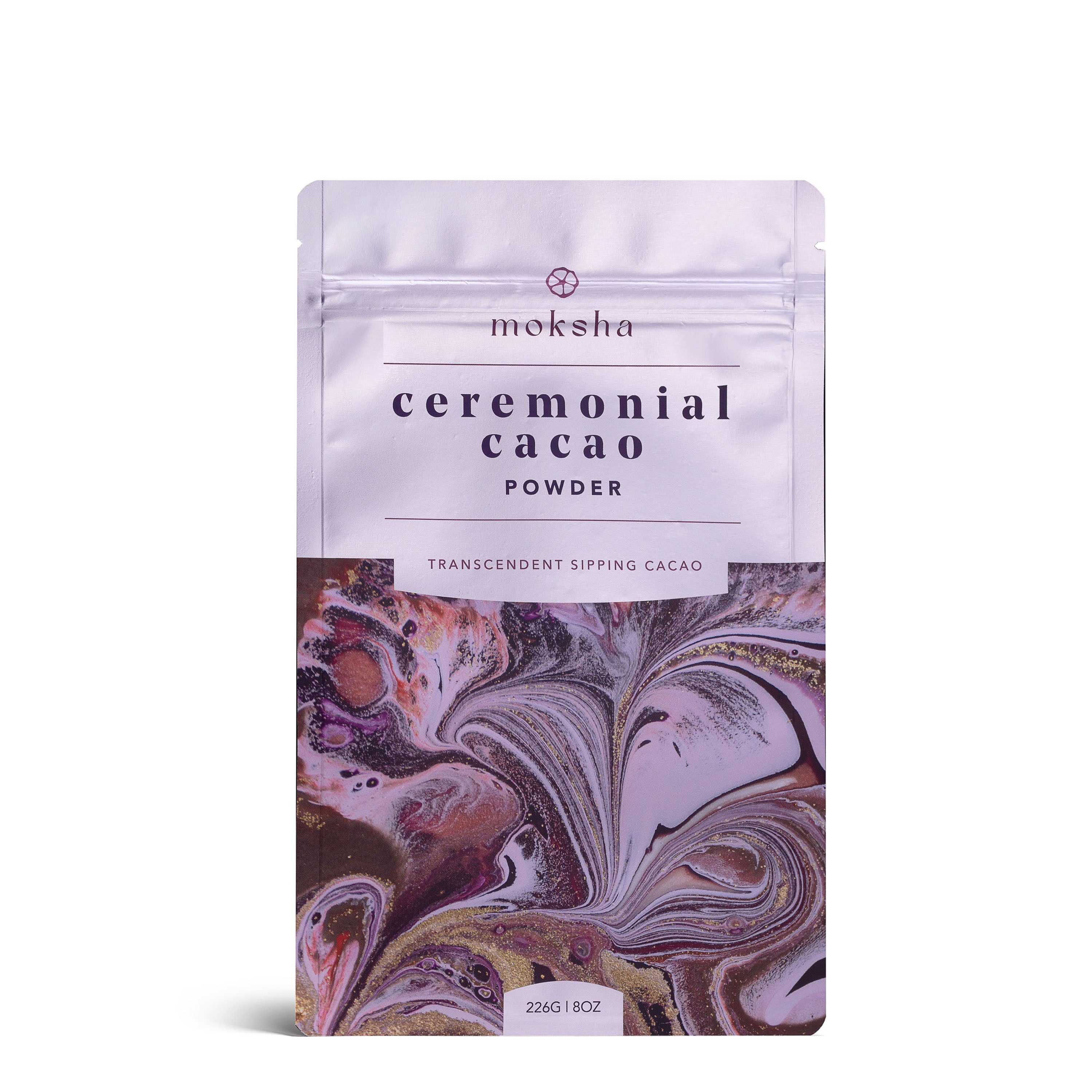
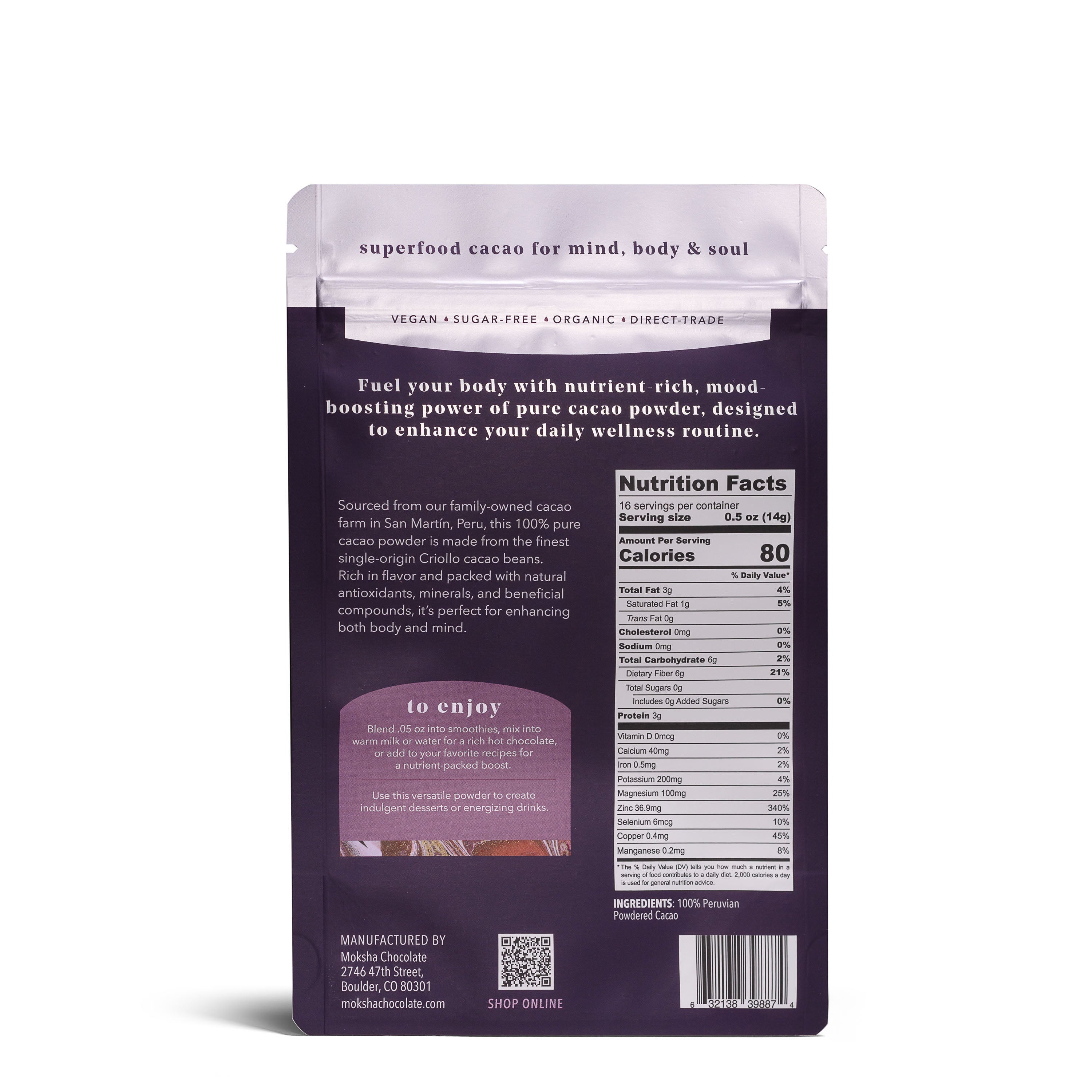
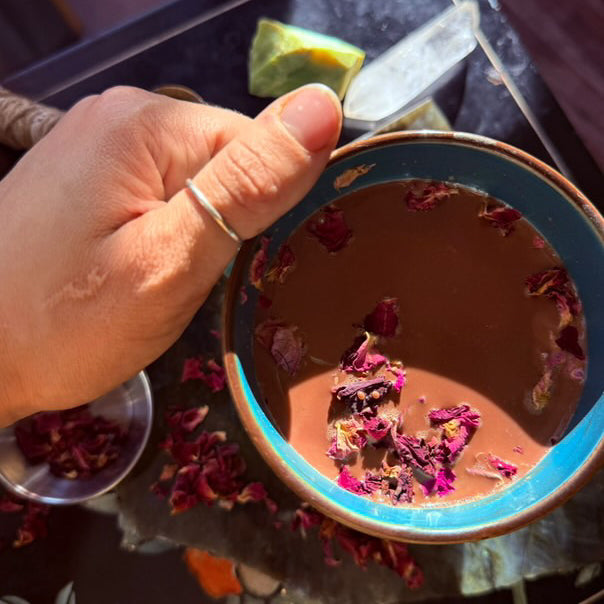
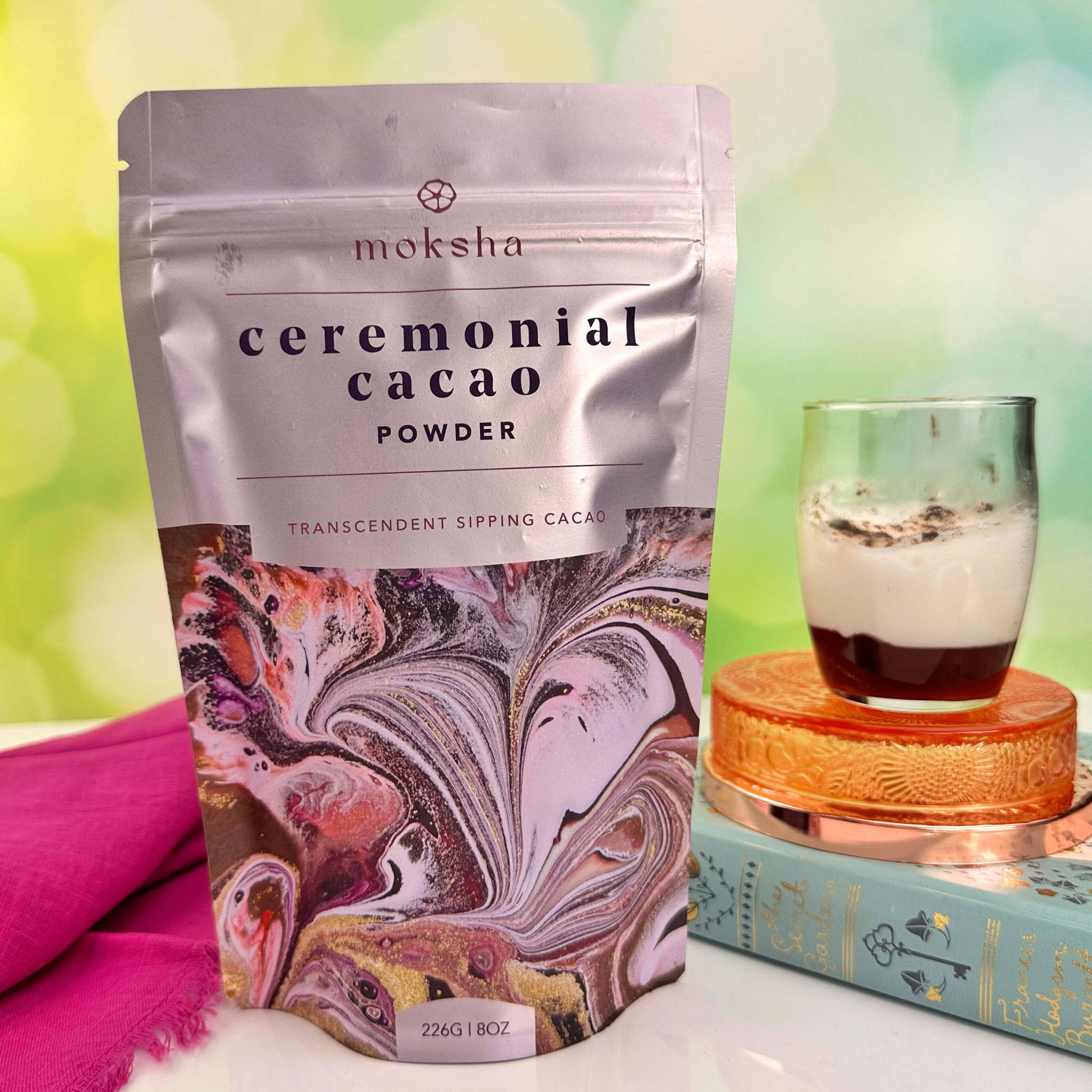
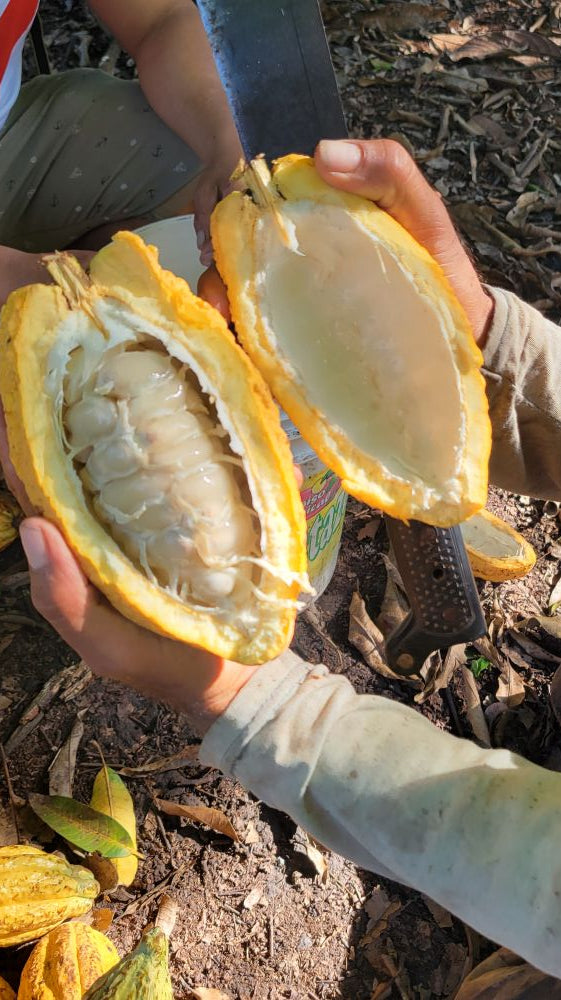
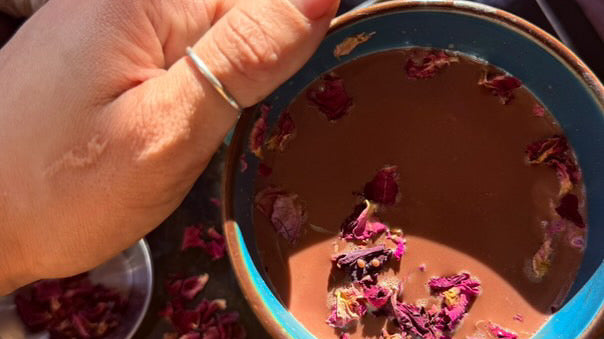
Ceremonial cacao is minimally processed cacao made from whole beans that have been fermented, dried, and ground without alkalization or added ingredients. It is different from standard cocoa powder, which is typically roasted at high temperatures and stripped of its natural fats. Because ceremonial cacao retains the full cacao butter content, it produces a richer, more complex drink than cocoa powder.
Cacao has been used as a food and drink for thousands of years, particularly in Mesoamerican cultures. Today it is enjoyed as a preparation that highlights the natural flavor of the bean: bitter, fruity, earthy, and deeply satisfying when made well.
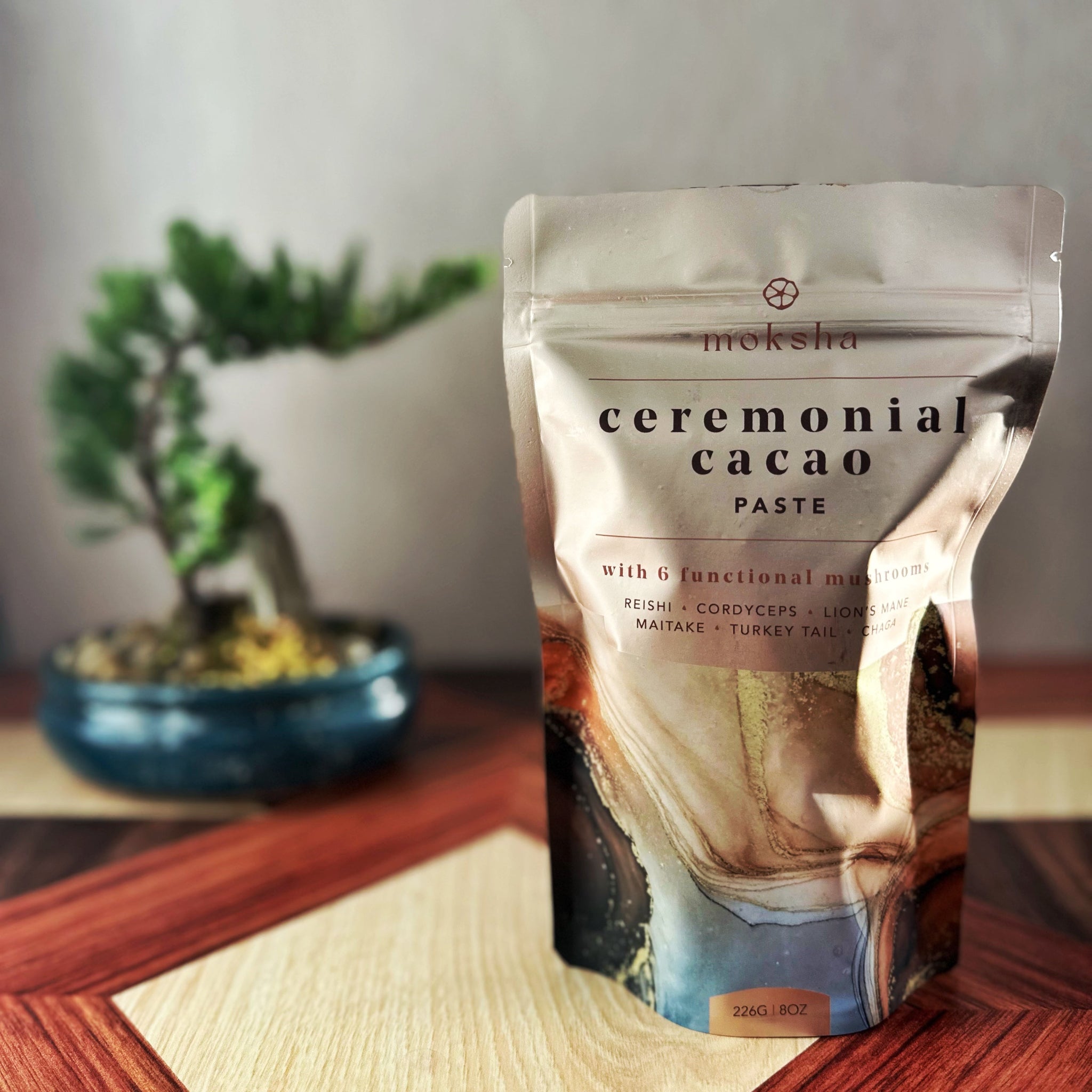
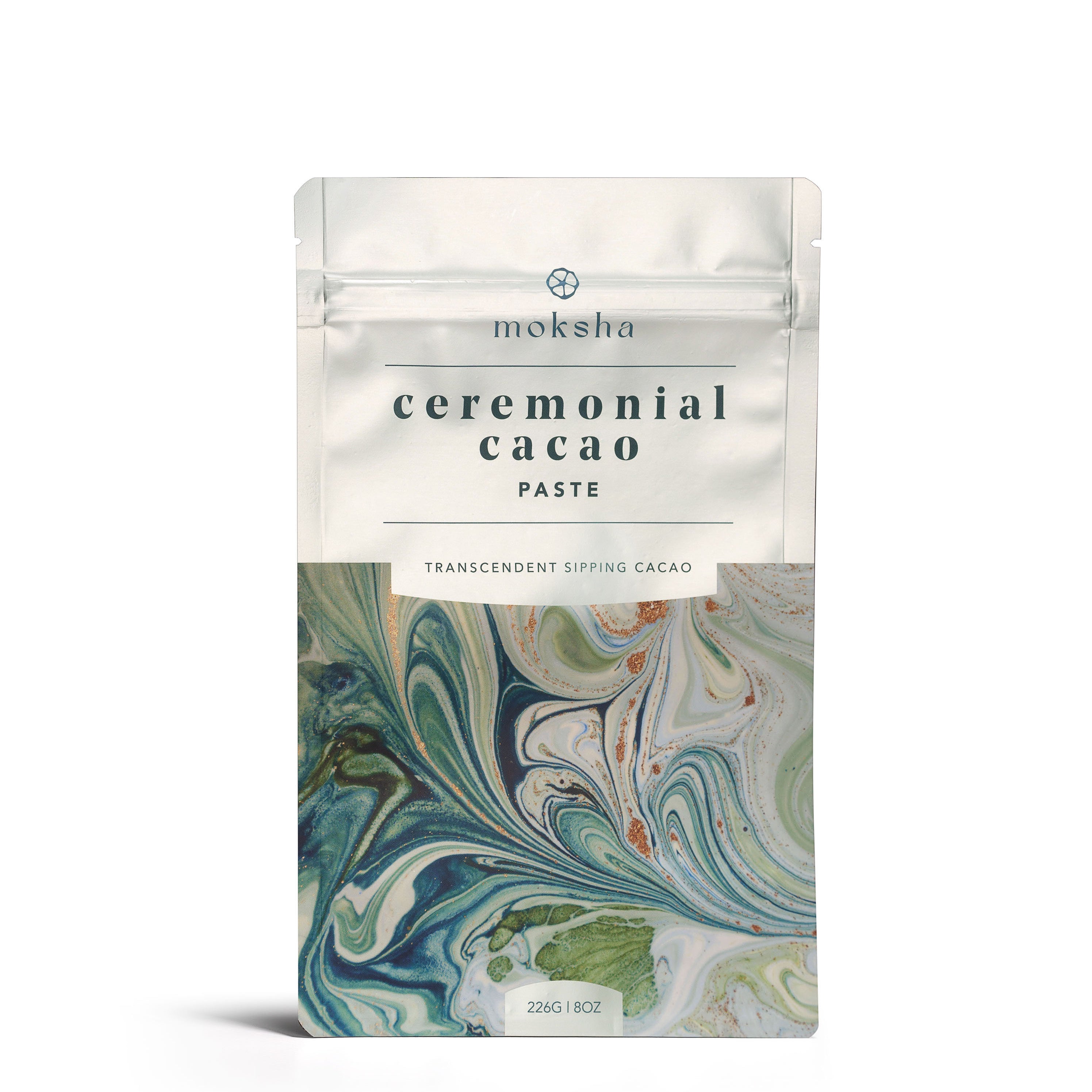
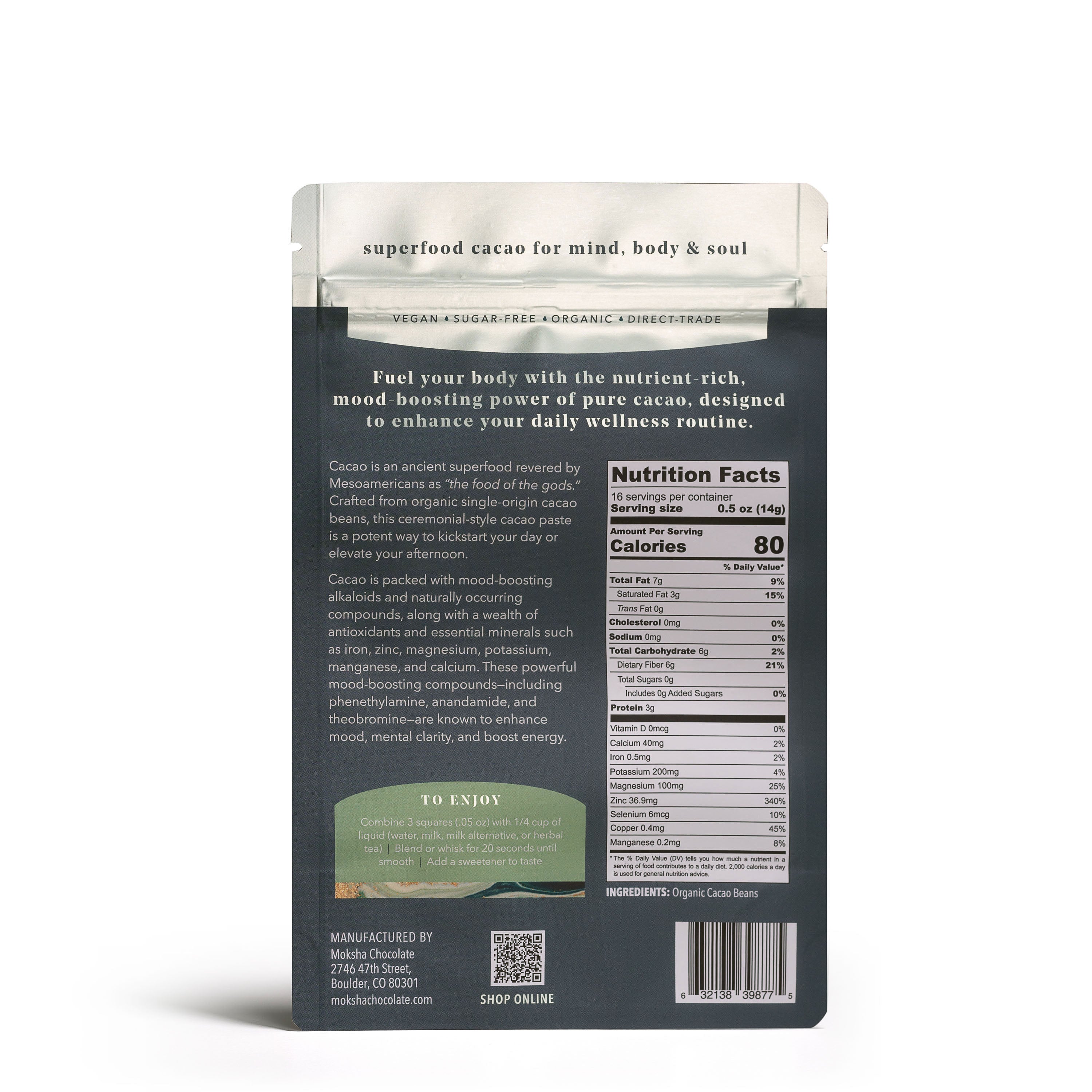
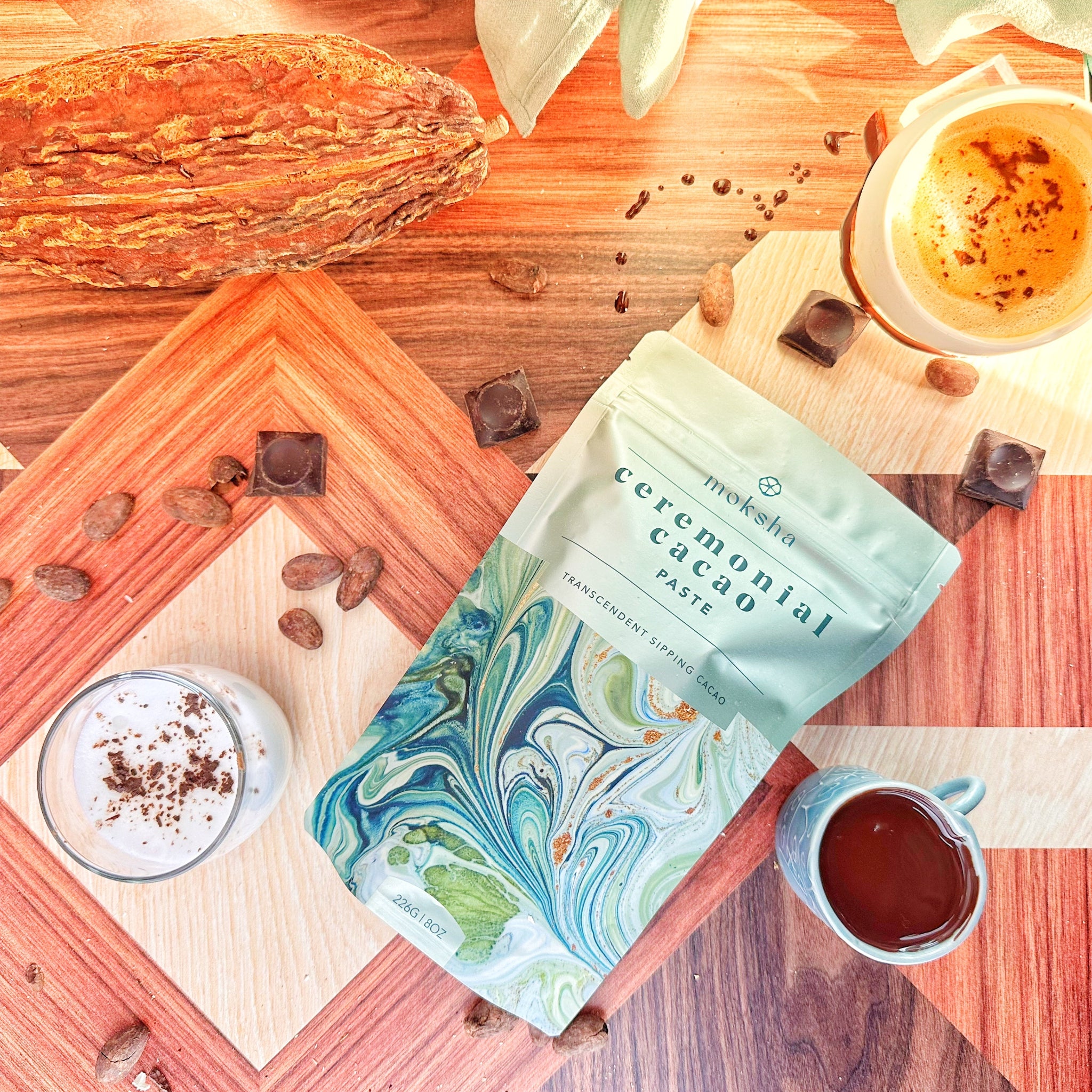
This guide covers how to prepare it at home using Moksha's Ceremonial Reserve™ Cacao Paste, a single-origin paste made from 100% Peruvian Criollo cacao.
What Is Ceremonial Cacao?
Ceremonial cacao paste is made by stone-grinding whole cacao beans into a thick, solid paste. Unlike cocoa powder, it retains all of the cacao butter, which gives it a velvety texture when melted into hot liquid. The flavor is more complex and less sweet than cocoa powder, with notes that vary by origin.
Moksha's Ceremonial Reserve paste comes from Shanao, a farm in the Alto Huayabamba Valley of northern Peru. The flavor profile includes dried fig, panela, soft plum, and toasted cacao, with warm, earthy undertones.
Classic Ceremonial Cacao Recipe
Ingredients
- 1 to 1.5 oz (about 28 to 42g) Ceremonial Reserve™ Cacao Paste, roughly chopped or broken into pieces
- 8 oz hot water or plant-based milk (oat, almond, or coconut milk all work well)
- Optional: a small amount of honey, coconut sugar, or agave to taste
- Optional: a pinch of sea salt, cinnamon, or cayenne
Instructions
- Heat your liquid to just below a boil, around 170 to 185 degrees F. Avoid a full boil, which can dull the flavor.
- Add the chopped cacao paste to your mug or a small saucepan.
- Pour a small amount of hot liquid over the paste first and whisk until it melts into a smooth base. This prevents clumping.
- Add the remaining liquid and whisk or froth until fully incorporated and slightly frothy.
- Taste before adding anything else. The paste has natural complexity that stands on its own.
- Add sweetener or spices if desired, stir, and drink slowly.
Ways to Adjust the Preparation
The classic preparation is a good starting point, but the ratio and additions are flexible.
- For a thicker, more intense cup: Use closer to 1.5 oz of paste and reduce the liquid slightly. The result is closer to a traditional drinking chocolate.
- For a lighter cup: Use 1 oz of paste with 10 oz of liquid. This is a good starting point if you are new to drinking cacao.
- For a spiced version: Add a pinch of cayenne and cinnamon before whisking. The heat from the cayenne opens up the fruit notes in the cacao.
- For a richer texture: Use full-fat coconut milk or oat milk instead of water. The fat content rounds out the natural bitterness.
- Iced: Prepare the paste with a small amount of hot water to melt it fully, then pour over ice and add cold milk. The flavor holds well cold.
What Is in Ceremonial Cacao
Ceremonial cacao paste contains theobromine, a naturally occurring compound in cacao that has been studied in relation to mild stimulation and circulation. It also contains magnesium, iron, and antioxidant compounds including flavanols and polyphenols. These are naturally present in the cacao bean and are retained because the paste is minimally processed.
The flavor complexity comes from fermentation and drying, which develop the bean's natural sugars and acids before grinding. Moksha's paste skips alkalization entirely, which preserves both the flavor and the naturally occurring compounds in the bean.
How Cacao Paste Compares to Cacao Powder
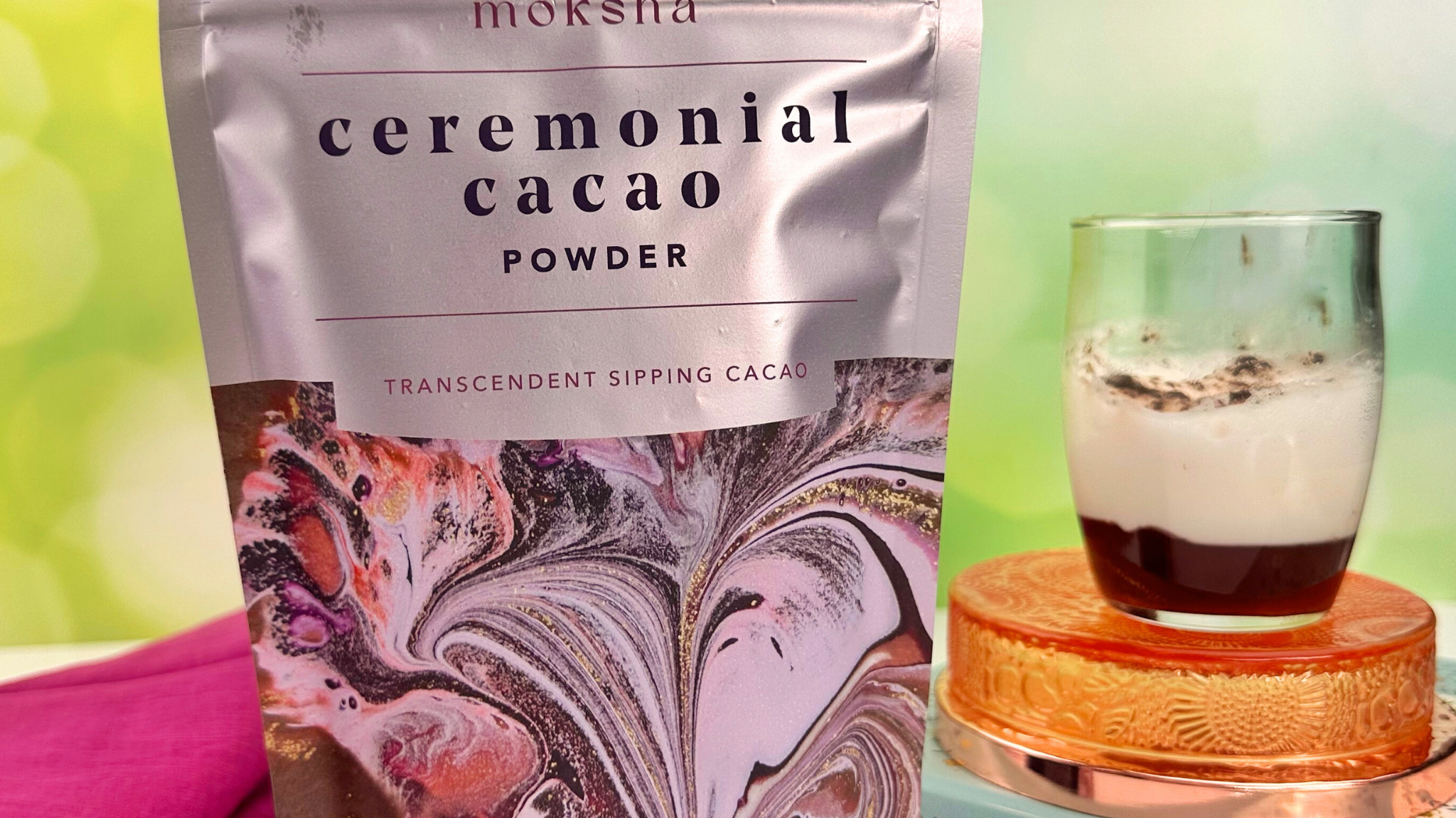
Paste and powder start from the same bean but diverge in processing. Paste retains all of the cacao butter, which gives it a richer, more viscous texture and a fuller flavor. Powder has had most of the fat removed, making it easier to dissolve and more versatile for baking.
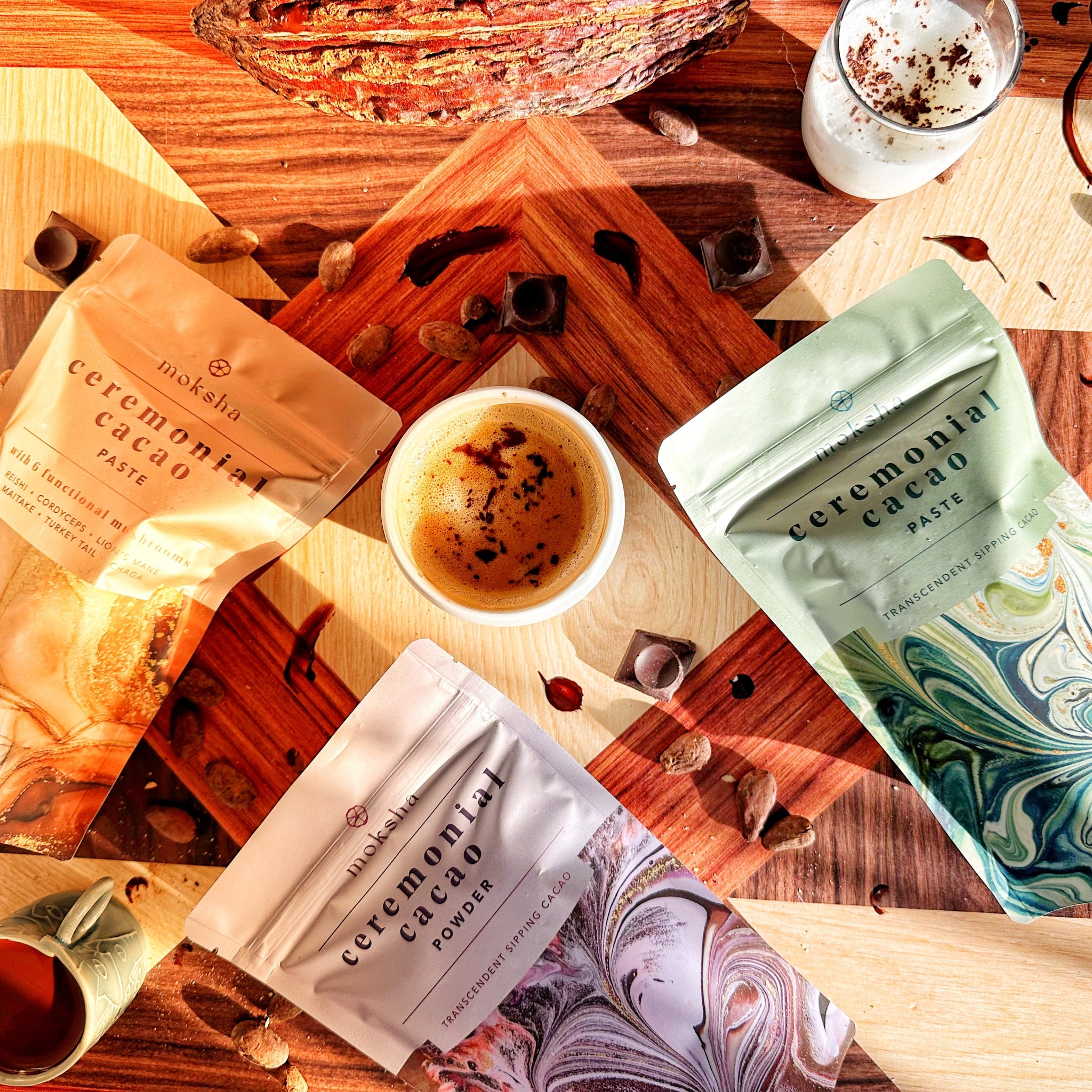
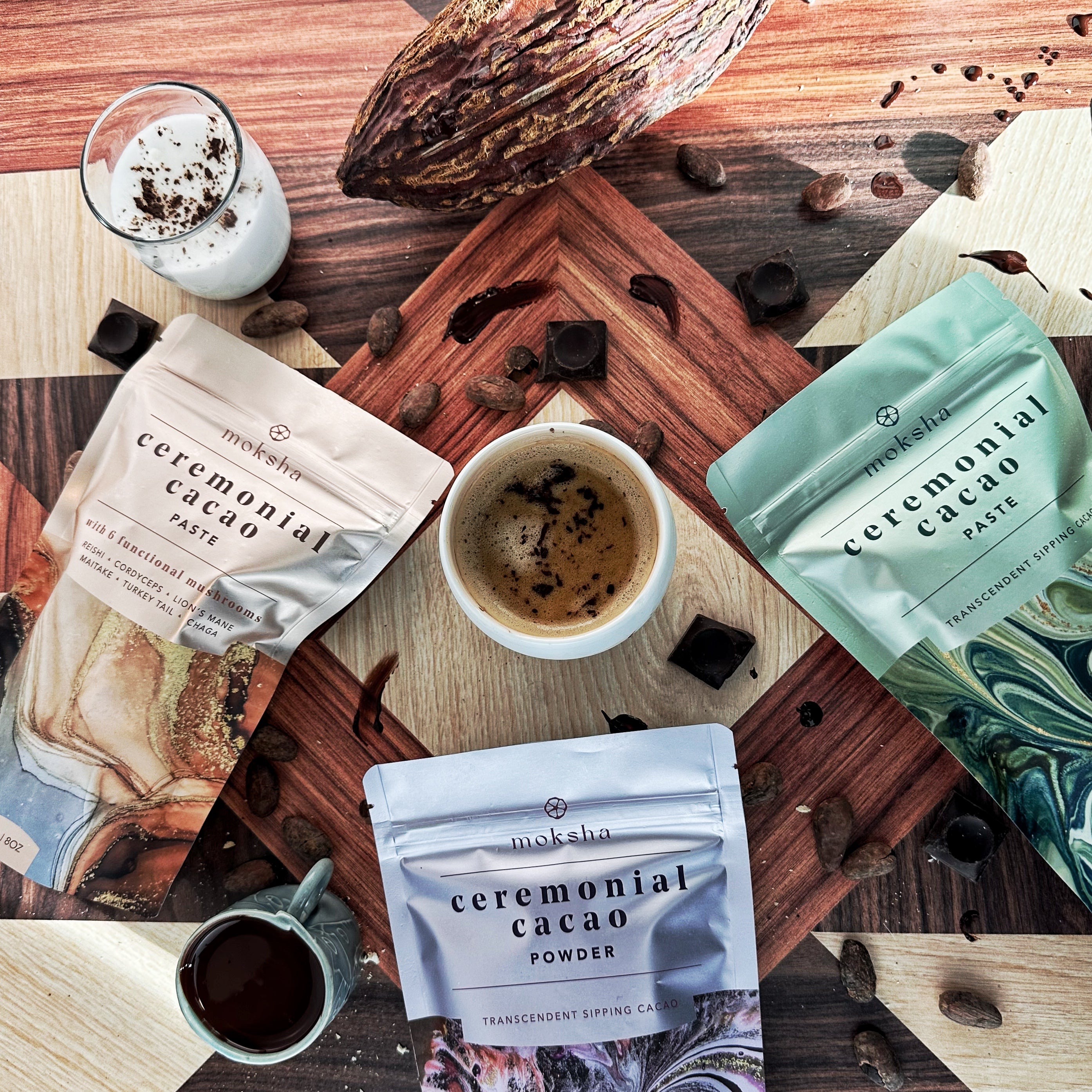
If you want to compare both formats side by side, the Ceremonial Cacao Discovery Kit includes both paste and powder from the same Peruvian origin.
Where to Start
If you are new to drinking cacao, start with 1 oz of paste in 8 oz of oat milk, no sweetener, and taste it plain before adjusting. The flavor is more bitter and complex than hot chocolate, and it takes a cup or two to calibrate your preference.
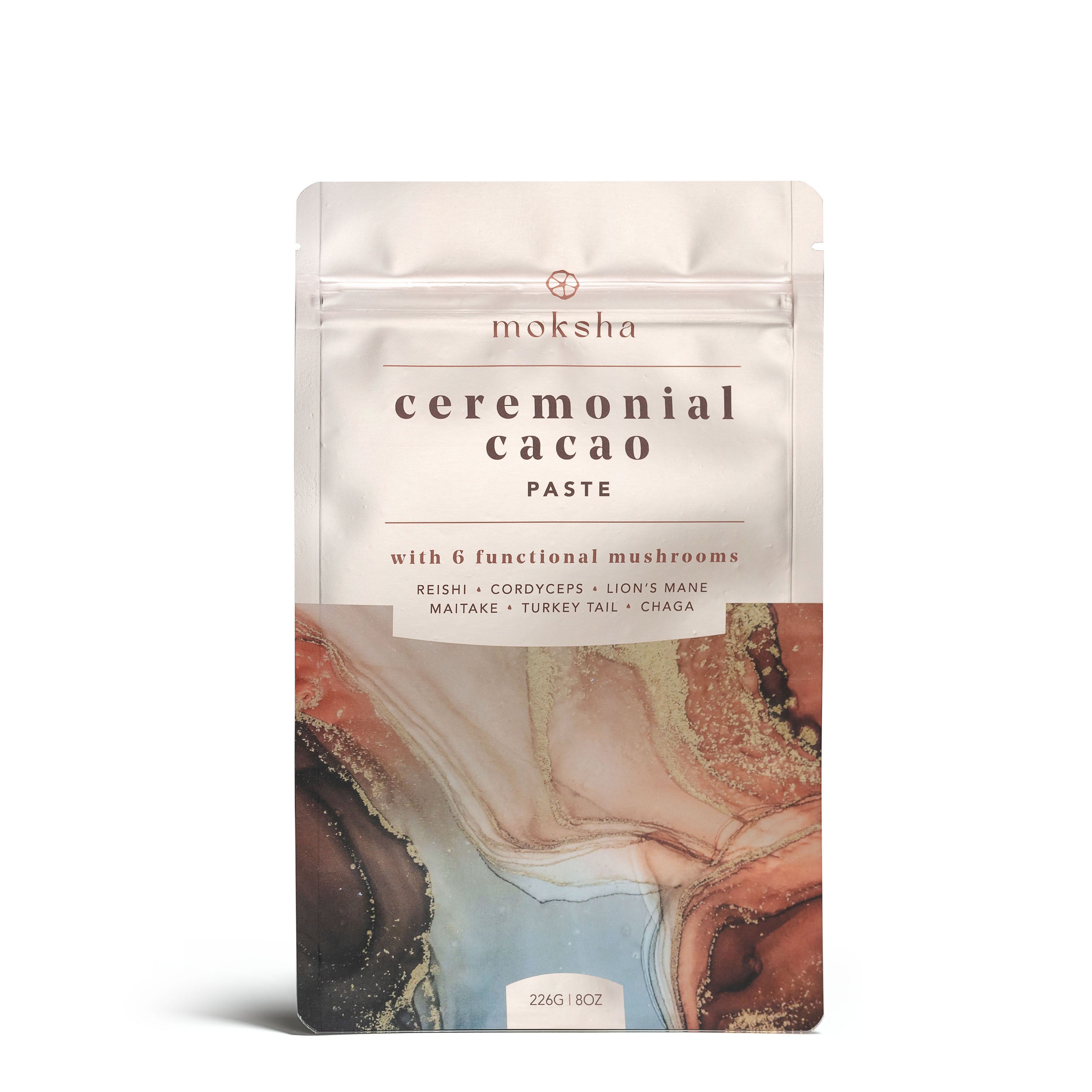
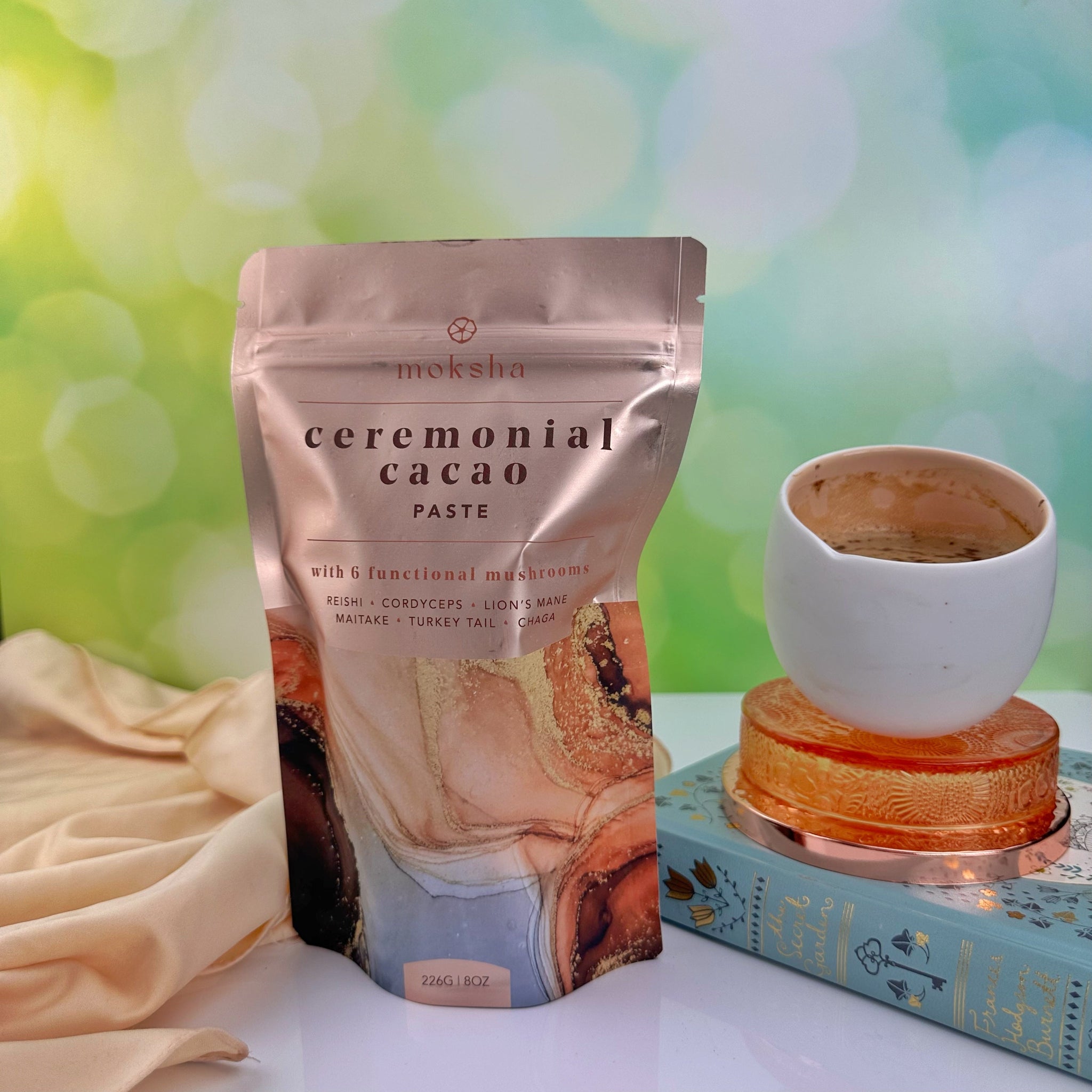
Moksha's Ceremonial Reserve™ Cacao Paste is available in 8 oz and 16 oz sizes, sourced directly from our farm in Shanao, Peru. It ships nationally and is available for local pickup in Boulder.
Chocolate is sensitive to heat. If you are ordering in summer, local pickup or local delivery is the best way to keep your order in great condition.