Every bar we make starts with cacao. This one also starts with a chile field. Our Colorado Pueblo Chile Dark Chocolate bar is back. This year, we've paired fire-roasted Pueblo chiles with Öko Caribe dark chocolate. Here's how the batch comes together, from the fields of Pueblo to our studio in Boulder.
The chiles
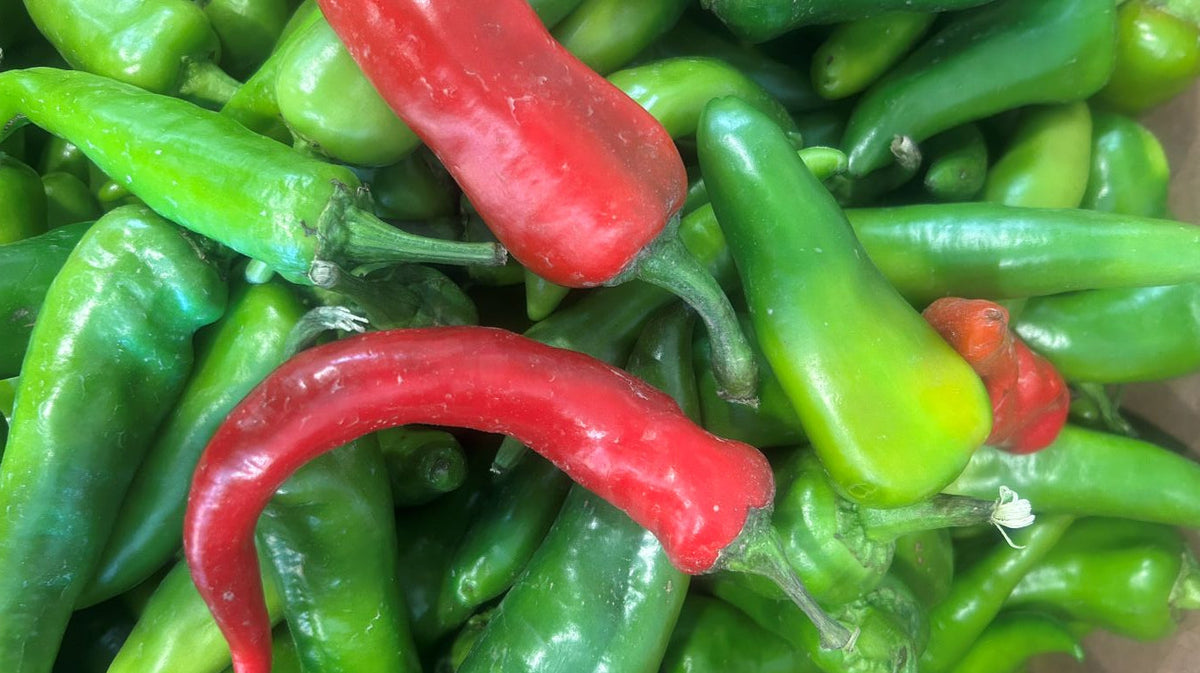
People have grown chiles in Pueblo since the 1840s. The sandy soil and dry climate near the Arkansas River Valley suit them well. In recent years, plant experts have improved the variety. Dr. Mark Bartolo of Colorado State University developed the Mosco green chile, and it's known for its thick skin and juicy flesh.
Pueblo chiles are meatier and thicker-skinned than the better-known Hatch chiles from New Mexico. That's what makes them great for roasting. They caramelize well and build a rich, smoky depth, with a bit more heat.
We get our dried green chiles from Mauro Farms in Pueblo, Colorado. It's a family farm with deep roots in the Pueblo chile business. [Add: anything worth noting about this year's harvest, such as timing or growing conditions.]
This year's wildfire season has been intense, and it got us thinking about smoke and flavor. Does smoke in the air change how chocolate tastes? We dug into that question in our post, Do wildfires change how chocolate tastes? Smoke, terroir, and the flavor of cacao.
Roasting and drying
Three steps turn fresh chiles into the flavor for this bar:
- We fire-roast the chiles. Roasting deepens their smoky flavor.
- We remove the skins and seeds.
- We dry the chiles. Drying concentrates the flavor and keeps extra water out of the chocolate.
That's what lets the chile blend into chocolate cleanly.

Five days in the chocolate
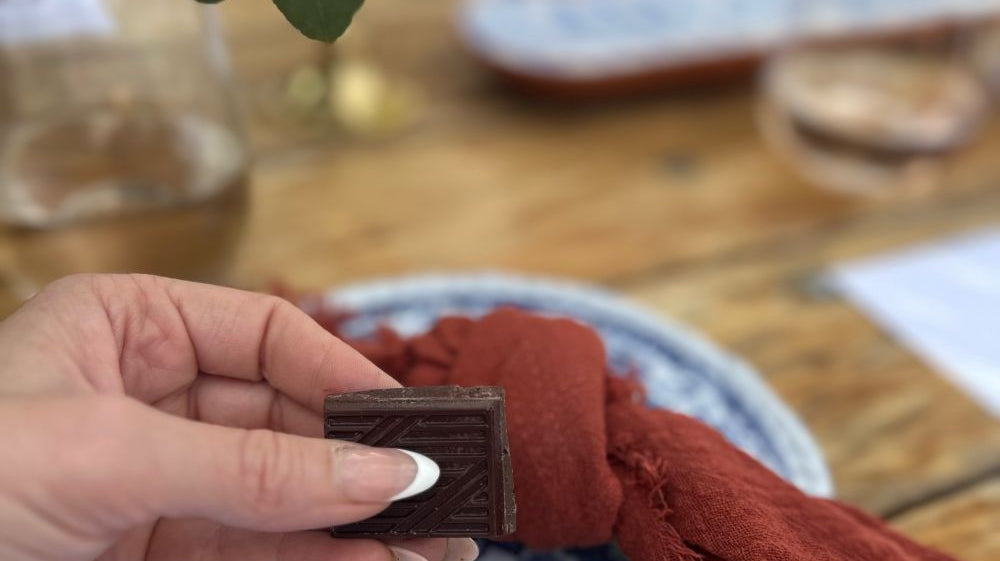
For this bar, we blend green and red chiles into the chocolate over five days. The finished bar has chile pieces and a touch of salt. [Add: batch size or any production details you'd like to share.]
An old pairing
Why mix chile with chocolate? The idea isn't new. It's very old, actually. The ancient Maya blended cacao with spice as early as 400 CE. They drank cacao mixed with chiles to celebrate. And even earlier, traces of theobromine from cacao have been found in Olmec pottery from 1600 BCE.
The chocolate underneath
The base is our Öko Caribe dark chocolate. Öko Caribe cacao comes from 165 farmers in the Duarte Province of the Dominican Republic, a region with rich clay soil and tropical rainforest.
The founders, Adriano de Jesus Rodriguez and Gualberto Acebey Torrejon, have more than 50 years of cacao experience between them. They run a central fermentation and post-harvest operation near Pimentel. They also teach their farmers better farming practices and offer loans for farm and family needs. Uncommon Cacao, the supplier, reports more than 90 awards for this cacao since 2014.
The chocolate tastes well-balanced, sweet, and fruity, with gently spicy notes: s'mores, brown sugar, cherry, and black pepper. The pepper note matches the chile heat, and the brown sugar sweetness rounds out the finish. Expect a noticeable kick at the end, not constant heat.

Taste this year's batch
The bar is available online at mokshachocolate.com, with shipping nationwide. If you're in Boulder, Colorado, you can use local pickup or local delivery. Chocolate is sensitive to heat. During warm months, local pickup or local delivery is the best way to keep your order in great condition.
Ready to try it? Order the Colorado Pueblo Chile Dark Chocolate bar, or explore the full range of Moksha single-origin and inclusion bars.
Local to Boulder? Book a private tasting to try the full lineup in person.