The Cacao Tree
The cacao tree (Theobroma cacao) grows in tropical climates within about 20 degrees of the equator. It is a small, delicate tree, typically reaching 15 to 25 feet in height, and it requires shade, humidity, and rich soil to thrive. The tree produces small white or pink flowers directly on its trunk and main branches, a phenomenon called cauliflory. These flowers are pollinated primarily by tiny midges. Not all flowers get pollinated, and only a fraction develop into pods.
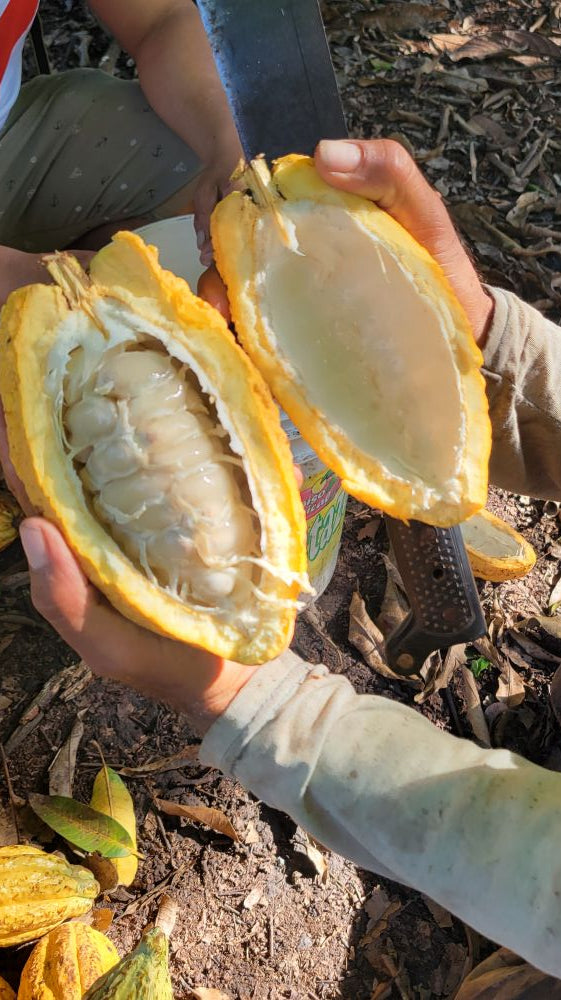
Once pollinated, a flower transforms into a cacao pod over the course of five to six months. Pods come in a range of colors depending on variety and ripeness: yellow, green, red, and purple. Each pod is roughly 8 to 14 inches long and contains 40 to 50 seeds, the cacao beans, surrounded by sweet white pulp.
There are three main cacao varieties: Criollo, Forastero, and Trinitario. Criollo is the rarest, representing less than 5% of global production, and is prized for its complex, low-bitterness flavor. Moksha's ceremonial cacao products are made from 100% Peruvian Criollo, sourced directly from our farm in the Alto Huayabamba Valley.
Harvesting

Harvesting is done entirely by hand. Ripe pods are cut from the trunk and branches with a machete or harvesting knife, taking care not to damage the flower cushions that will produce future pods. Each pod is opened on-site, and the beans and surrounding pulp are scooped out together. The pulp is sweet and edible, with a flavor closer to lychee or mango than chocolate. It plays an important role in the next step.
Timing matters. Underripe pods produce beans with less developed sugars, which limits fermentation quality. Overripe pods can introduce off-flavors. Experienced harvesters assess each pod individually, which is one reason smallholder farms with attentive post-harvest practices tend to produce better-tasting cacao than large-scale commodity operations.
Fermentation

Fermentation is the most important step in flavor development. The beans and pulp are placed in shallow wooden boxes or baskets and left to ferment for two to seven days, depending on the variety and the producer's method. During this time, yeasts and bacteria break down the pulp, generating heat and producing acids that penetrate the bean and trigger chemical changes inside it.
These changes are what create chocolate flavor. Without proper fermentation, even the best-grown cacao will taste flat, astringent, or bitter in the wrong way. With good fermentation, the bean develops the precursors to the fruity, nutty, and complex notes that distinguish fine-flavor cacao from commodity chocolate.
After fermentation, the beans have lost roughly half their original weight as the pulp breaks down and drains away.
Drying

After fermentation, the beans are spread out to dry in the sun for five to seven days. Drying must happen slowly and evenly. Beans are raked and turned regularly to ensure uniform moisture loss and to prevent mold. The goal is to bring moisture content down from around 60% to approximately 6%, which is low enough to prevent spoilage during storage and shipping without over-drying the bean.
The drying stage also allows some of the acidity developed during fermentation to dissipate, which softens the flavor profile. Beans dried too quickly, or in mechanical dryers at high heat, can retain excess acidity or develop off-flavors. Sun drying on raised beds, the method used at Moksha's partner farm in Shanao, Peru, produces a cleaner, more balanced result.
Export and Shipping

Once dried, the beans are sorted by size, with undersized or damaged beans removed. The remaining beans are packed in hessian (burlap) sacks and shipped to chocolate makers around the world. Proper storage during transit matters: beans must be kept dry and away from strong odors, which cacao absorbs readily.
At Moksha, we source directly from farms rather than through commodity brokers. Direct sourcing means we know exactly where the beans came from, how they were fermented and dried, and who handled them at each step. That traceability is what makes single-origin chocolate possible.
From here, the beans arrive at our Boulder facility, where they are roasted, cracked, winnowed, and stone-ground into chocolate. That process is covered in our guide to tasting craft chocolate.
If you want to taste the difference that careful post-harvest handling makes, our single-origin chocolate bar collection includes bars from multiple origins side by side. Our Ceremonial Reserve™ Cacao Paste and Ceremonial Reserve™ Ground Cacao Powder both start with the same Peruvian Criollo beans described above.